


Talk about your brand7 Elements of Modern West Coast Interior Style
Last Updated: October 30, 2026
Quick Summary
Modern West Coast interior style pairs clean, low-slung forms with natural materials, generous glass, and a calm neutral base, treating the view outside as part of the room. A west coast interior is built on seven elements: open layouts, large windows, natural materials, a neutral base, muted coastal accents, simple linear forms, and organic texture.
- Keep the tallest furniture against walls so the floor plane runs uninterrupted between zones.
- Use two or three dominant natural materials per room rather than a sampler of many.
- Build palettes in three tiers: about 60 percent base, 30 percent mid, 10 percent accent.
- In an inland home, warmer wood tones and a deeper neutral base offset cooler daylight.
- If you can only change three things, start with wall color, one large natural-fiber rug, and a repeated accent.
Table of Contents
- What Modern West Coast Interior Style Actually Looks Like
- West Coast Modern Interior Design: Light, Layout, and Linear Form
- Modern Coastal Interior Design Without the Nautical Clichés
- Building a Coastal Color Palette for Interiors That Lasts
- West Coast vs. East Coast Interior Design: What Changes
- Shop the Look at Eichholtz California
- Frequently Asked Questions
What Modern West Coast Interior Style Actually Looks Like
Modern West Coast interior style is a design approach that pairs clean, low-slung forms with natural materials, generous glass, and a calm neutral base. It treats the view outside as part of the room.
The look is not a trend. It grew out of mid-century California architecture and the way people there actually live: indoors and outdoors on the same day.
Seven Elements That Define the Look
Here are the seven elements we return to again and again, with the concrete move that makes each one read correctly:
- Open, flowing layouts that connect rooms to each other. The mechanism is sightline continuity: keep the tallest furniture against walls and let the floor plane run uninterrupted between living, dining, and kitchen zones. A common pattern is to define zones with rugs and lighting rather than walls.
- Large windows and doors that pull in daylight. Floor-to-ceiling glass and multi-panel sliders are the signature move; where full glazing is not possible, a wide horizontal window band preserves the effect better than several small punched windows.
- Natural materials like wood, stone, and rattan. Two or three dominant materials per room, for example white oak, honed limestone, and rattan, tend to read calmer than a sampler of many.
- A neutral base of beige, sand, bone, and warm grey. A neutral base typically covers the largest share of the visual field, with mid-tones and accents making up smaller shares.
- Coastal accents in muted blue and green. Keep them in low-saturation, greyed versions, sea-glass green and dusty blue rather than primary hues.
- Simple, linear forms with low profiles. Low arms, long horizontals, and exposed stairs reinforce the architecture; a sofa back that sits below the window sill keeps the glass line visible.
- Organic texture that adds warmth without clutter. Linen, wool, cane, and unfinished wood add tactile variation so a neutral room does not read flat.
Get these right and the room reads instantly as West Coast modern. For room-by-room guidance, see How Do You Style a Luxury Living Room?. Miss two or three, and it drifts toward generic contemporary.
How the Style Adapts to Different Homes
One reason the style travels well is that its core moves can be scaled. In an apartment without a view, the same principles apply through a single large window, a mirrored or light-toned wall opposite the glass, and a low furniture profile that keeps the ceiling line open.
The trade-off to know: the style's openness leaves little room to hide clutter. Most successful rooms build in closed storage that matches the wall color so it recedes, rather than relying on open shelving as a display.
West Coast Modern Interior Design: Light, Layout, and Linear Form
West Coast modern interior design starts with the shell of the house, not the furniture. Floor-to-ceiling glass, a vaulted ceiling, and a shed roofline are doing half the work before a single chair arrives.
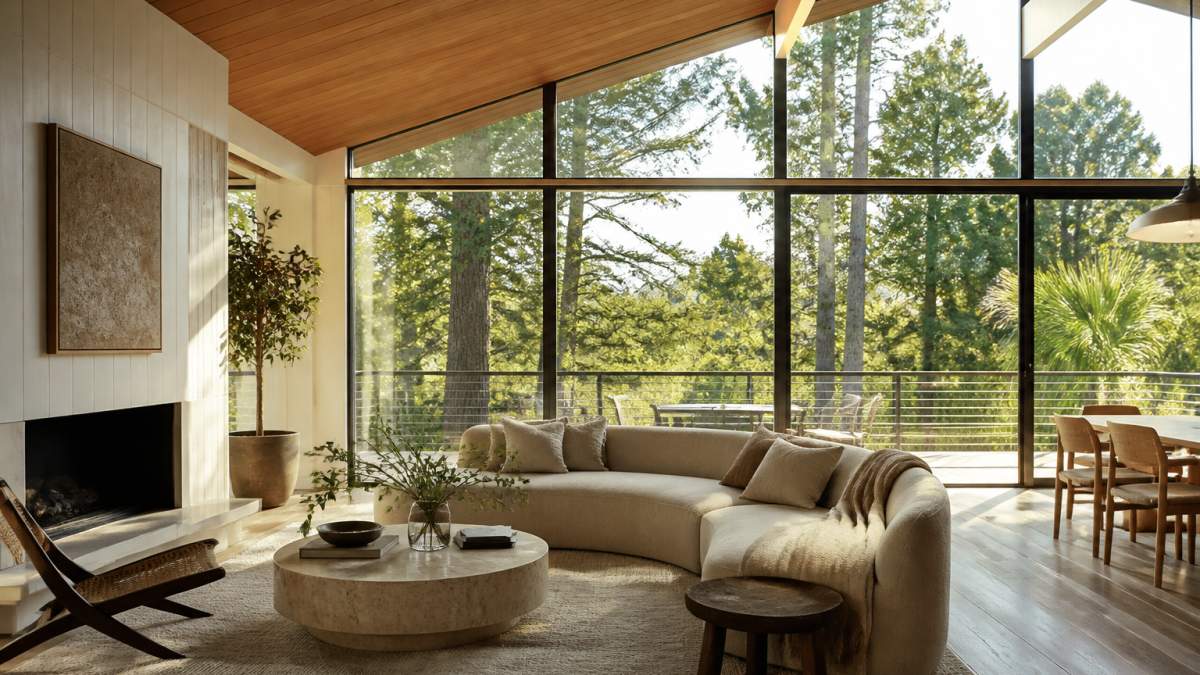
Our advice: protect that light. A curved piece like our Modern Minimalist Curved Sofa Bernd keeps sightlines soft and open in a way boxy sectionals rarely do.

Linear simplicity matters too. Low arms, long horizontals, and exposed stairs all reinforce the architecture.
Modern Coastal Interior Design Without the Nautical Clichés
Modern coastal interior design borrows the calm of the shore without the anchors, rope, and sailboat prints. The goal is texture and tone, not theme.
A common mistake is over-signaling the coast. One natural fiber piece is enough.
- Rattan or cane for warmth
- Linen and cotton for softness
- Driftwood tones in wood finishes
The High-Back Rattan Lounge Chair Colony is made of rattan with a honey finish, a natural material that suits a coastal-leaning palette.

Building a Coastal Color Palette for Interiors That Lasts
A coastal color palette for interiors works best when it is built in layers rather than picked all at once. Start neutral, then add accent color sparingly.
High-Back Rattan Lounge Chair Colony →
We build palettes in three tiers:
- Base (about 60 percent of the visual field): bone, sand, warm white, soft grey
- Mid (about 30 percent): oak, rattan, taupe, charcoal
- Accent (about 10 percent): muted blue, sage, sea green
Keep accents to roughly one part in ten. This stops a room from feeling themed and keeps it calm. The Natural Rattan Side Table Tiago is a natural rattan piece that can complement these palette tiers.

Adjusting the Palette by Room and Light
The same three tiers behave differently room to room, and the adjustment is mostly about light rather than taste:
- Living room: the fullest expression of the palette, since it usually has the best daylight. Put the base on walls and the largest upholstery, the mid-tier on wood and case goods, and the accent on pillows, art, and one ceramic or glass object.
- Kitchen: hard surfaces dominate, so let the base live in cabinetry and backsplash and use the mid-tier in wood open shelving. Accent color is best confined to a single repeated element, a row of pendants or a run of tile, rather than scattered.
- Bedroom: shift the base one step warmer (sand over bone) and drop the accent to a single textile, because low evening light makes cool accents read grey.
A north-facing room with cool, indirect light tends to flatten greyed blues; warming the base by one step and choosing sage over sea green keeps the palette from going cold. A south- or west-facing room with strong afternoon light can carry a slightly deeper accent without feeling heavy.
Doing It at Different Budgets
The palette is the cheapest part of the style to get right, which makes it the best place to start when funds are limited. A common pattern is to spend first on the base, paint, a large rug, and the largest upholstered piece, because those cover the most visual area per dollar. Mid-tier wood and rattan can be added piece by piece, and accent color is where substitutions are easiest: a $40 pair of linen pillow covers in dusty blue does the same work as a designer textile at many times the price.
Making the Palette Last
Durability is part of the palette's longevity. Natural fibers and undyed woods patina rather than fail, so a slightly darker wood tone after a few years still fits the scheme. The materials that age least gracefully in this palette are high-saturation printed textiles and glossy finishes, which show wear against a matte, neutral room. Choosing washable linen and wool blends for the pieces that get daily contact keeps the look intact longer than trend-driven fabrics.
West Coast vs. East Coast Interior Design: What Changes
West Coast vs. East Coast interior design comes down to light and mood. West Coast rooms lean relaxed, open, and sun-driven. East Coast rooms lean formal, layered, and pattern-rich.
| Feature | West Coast | East Coast |
|---|---|---|
| Palette | Neutral with soft coastal accents | Deeper colors, jewel tones |
| Materials | Wood, stone, rattan, linen | Velvet, wool, dark woods |
| Layout | Open and flowing | Defined, separate rooms |
| Pattern | Minimal, organic | Stripes, florals, geometric |
| Mood | Relaxed, airy | Formal, collected |
Neither is better. But if you want the West Coast look, resist the pull toward heavy pattern and dark wood.
Shop the Look at Eichholtz California
Bringing the look together is easier when the pieces are chosen as a set. Read our guide to curated luxury furniture for how to buy pieces that last.
Over 80% of our catalog is stocked for immediate delivery.
Best for: homeowners and designers building a cohesive West Coast room. Skip if: you only need a single accent piece and no guidance.
Frequently Asked Questions
What is modern West Coast interior style?
It is a regional design approach that combines clean modern architecture with natural materials and a close relationship to the outdoors. Expect open floor plans, large windows that pull in daylight, warm wood and stone finishes, and a neutral base lifted by blue or green accents. The goal is calm and spatial flow rather than decoration. It reads as relaxed and refined at once, which is why it suits both full renovations and single-room updates.
How is West Coast style different from coastal style?
Coastal style leans on a literal beach theme: shells, rope, driftwood, and crisp white-and-navy pairings. Modern West Coast interior style takes the coastal influence and strips out the props. You get the light, the airy palette, and the natural textures, but the forms stay linear and architectural. A rattan lounge chair or a glass-topped side table can carry the coastal note without a single anchor motif in the room.
What colors are used in modern West Coast interiors?
Start with a neutral palette of warm white, sand, greige, and soft taupe. Layer in muted blues and greens, such as slate, sage, and ocean grey, as accents rather than wall-to-wall color. Charcoal and black appear in small doses on frames, hardware, and table bases to ground the scheme. Keep saturation low so the palette stays calming and the natural light does the rest of the work.
Which materials and textures suit a West Coast modern home?
Natural wood is the anchor, especially oak, cedar, and rattan in warm honey or charcoal finishes. Stone and slate add weight on floors, fireplaces, and table tops, while glass keeps pieces visually light. Layer in organic textures through woven seating, linen upholstery, and wool rugs. Untreated or lightly finished surfaces are often used in this style.
Building a West Coast modern room takes more than a few good finds. It takes a palette, a plan, and pieces that speak to each other. Eichholtz California can help with personalized design guidance, a stocked catalog for faster delivery, and design fees fully credited toward your purchase. Get started with Eichholtz California and bring the light, texture, and calm of the coast into your home.
